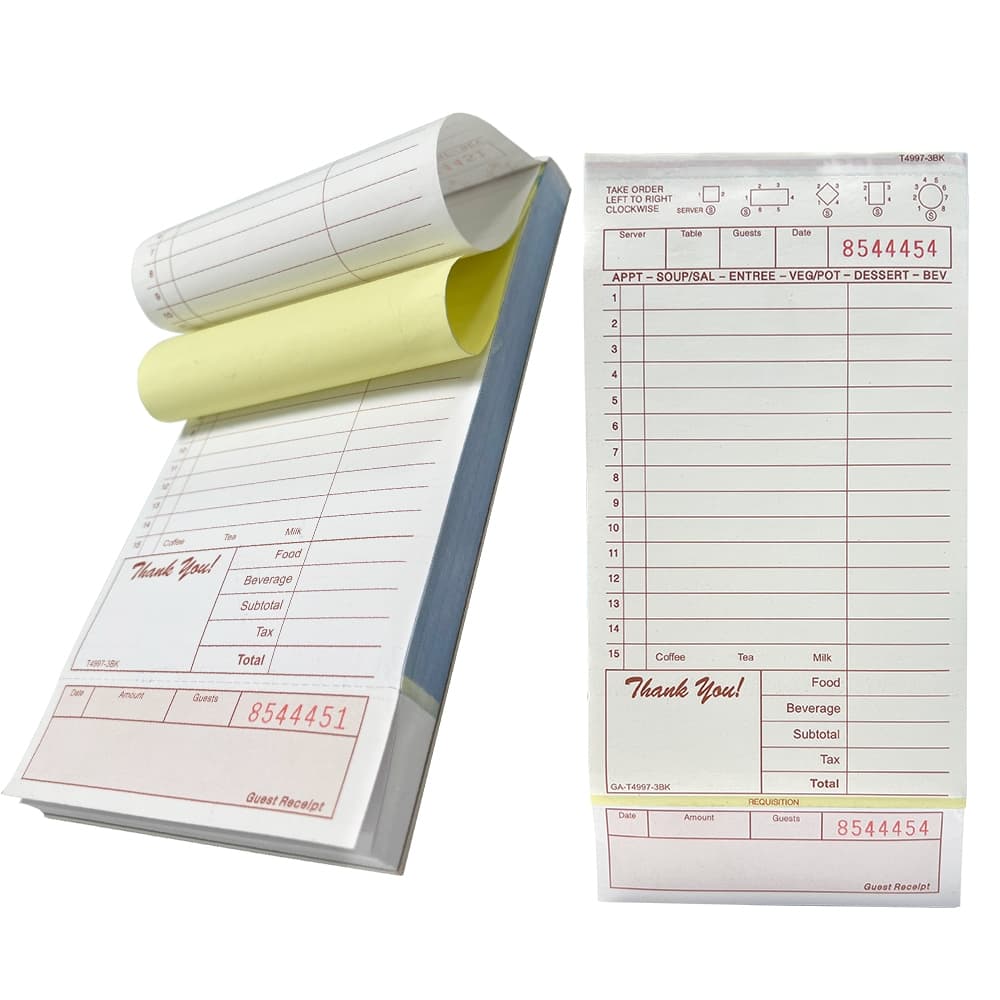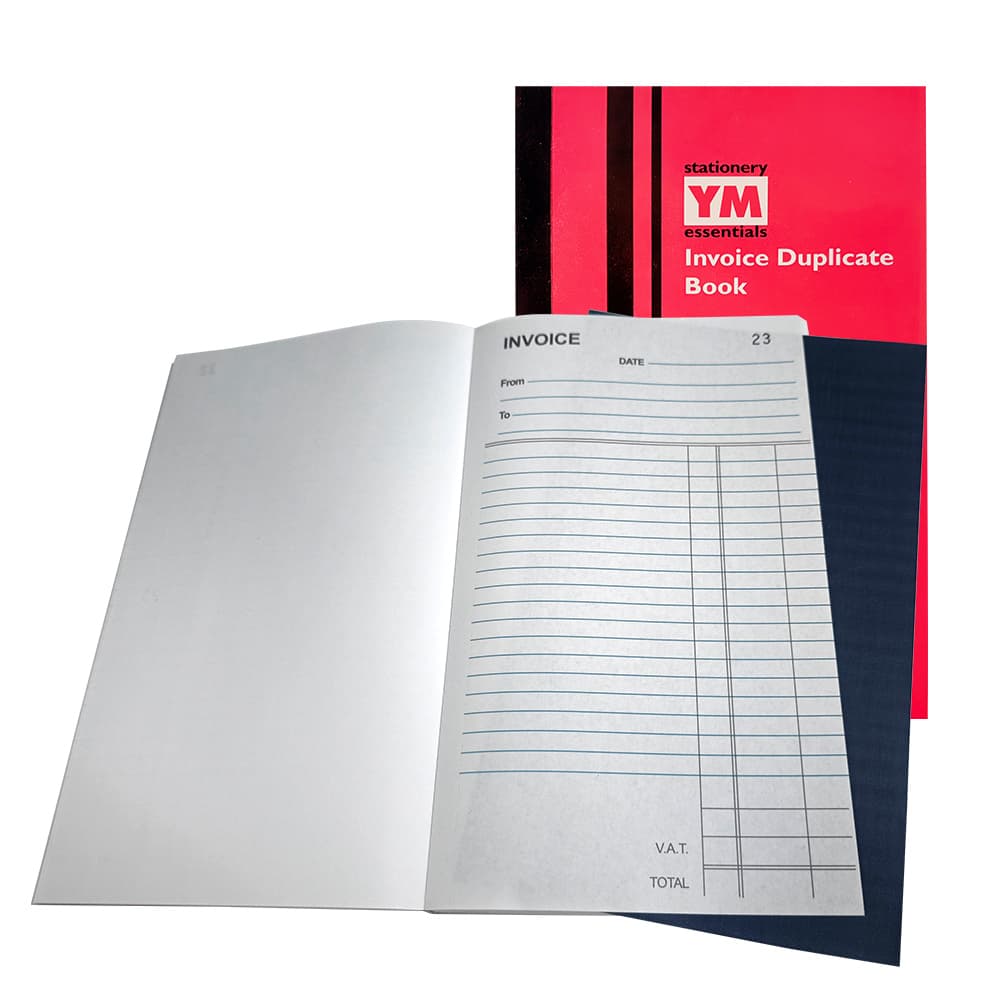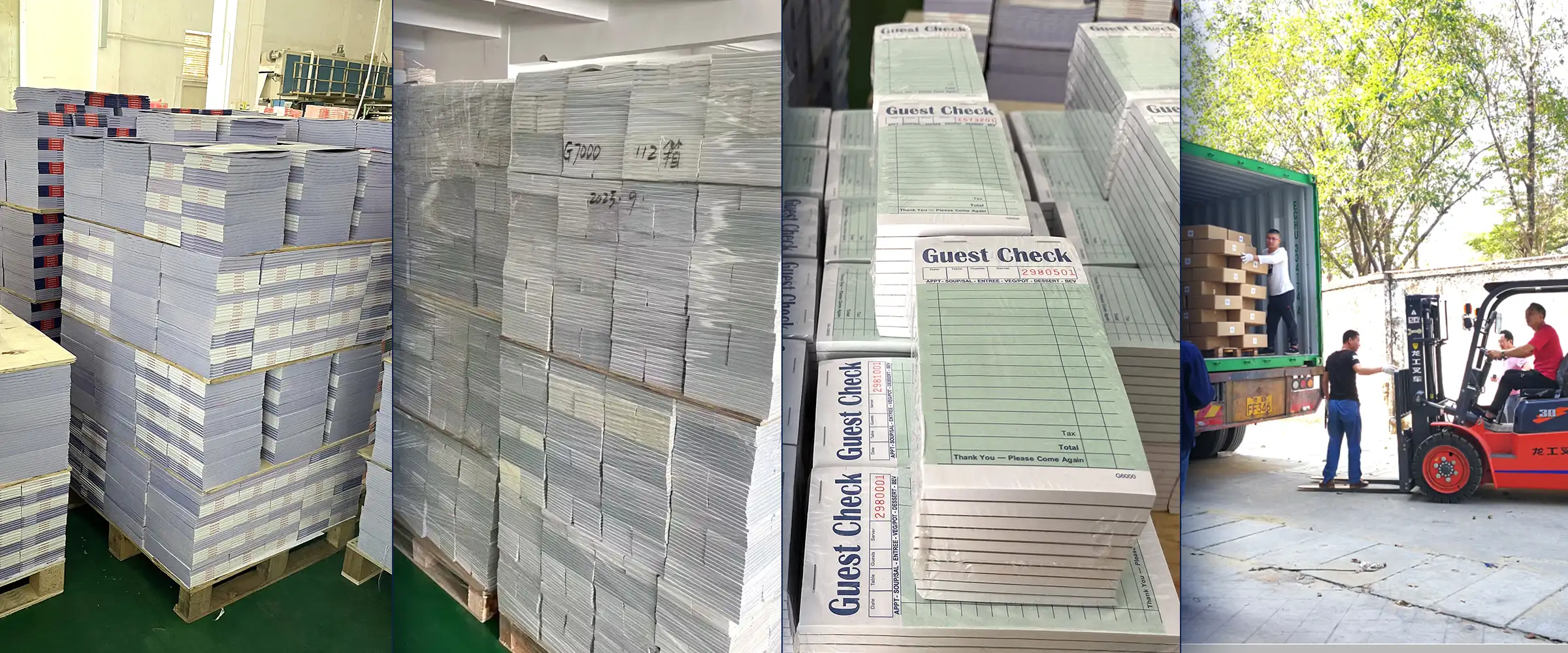
A distributor should treat every bulk custom printed paper order as a controlled SKU, not as a general request for “branded forms” or “printed books.” Before asking for a quotation, define the finished product, artwork version, packing hierarchy, logistics data and approval route. The result should be a specification that another buyer can understand and reorder without relying on memory.
This checklist is suitable for guest checks, carbonless forms, carbon-copy forms, invoice or receipt books, order pads, napkin bands and similar printed paper products. It does not replace order-specific confirmation from the printer, freight provider, customs broker or compliance adviser.
Quick answer
For a repeatable bulk order, freeze five connected records: the product, artwork, unit pack, shipping pack and commercial handoff.
- Give every sellable variation its own item code or internal SKU.
- Specify construction and function before discussing appearance.
- Keep print artwork separate from carton, pallet and warehouse-label data.
- Approve a dated proof and control later changes by version.
- State quantities at unit, inner-pack, carton and pallet level.
- Name the Incoterms rule and place instead of writing “shipping included.”
- Save the approved specification, proof and packing record for reorders.
Start with the resalable SKU
The first question is not “How many cartons?” It is “What exact item will the distributor stock and resell?” Two products that look similar may need separate records because their copy count, page count, language, numbering, pack quantity or customer branding differs.
Assign a temporary item code while the order is being developed. Record the target customer or channel, intended use and whether the item is standard, customer-exclusive or private label. This prevents artwork from one account being attached to a similar product for another account.
If several designs share the same physical construction, separate the common manufacturing specification from the design-specific artwork. That makes the shared elements easier to compare while preserving a clear identity for every sellable version.
Freeze the bulk-order product specification
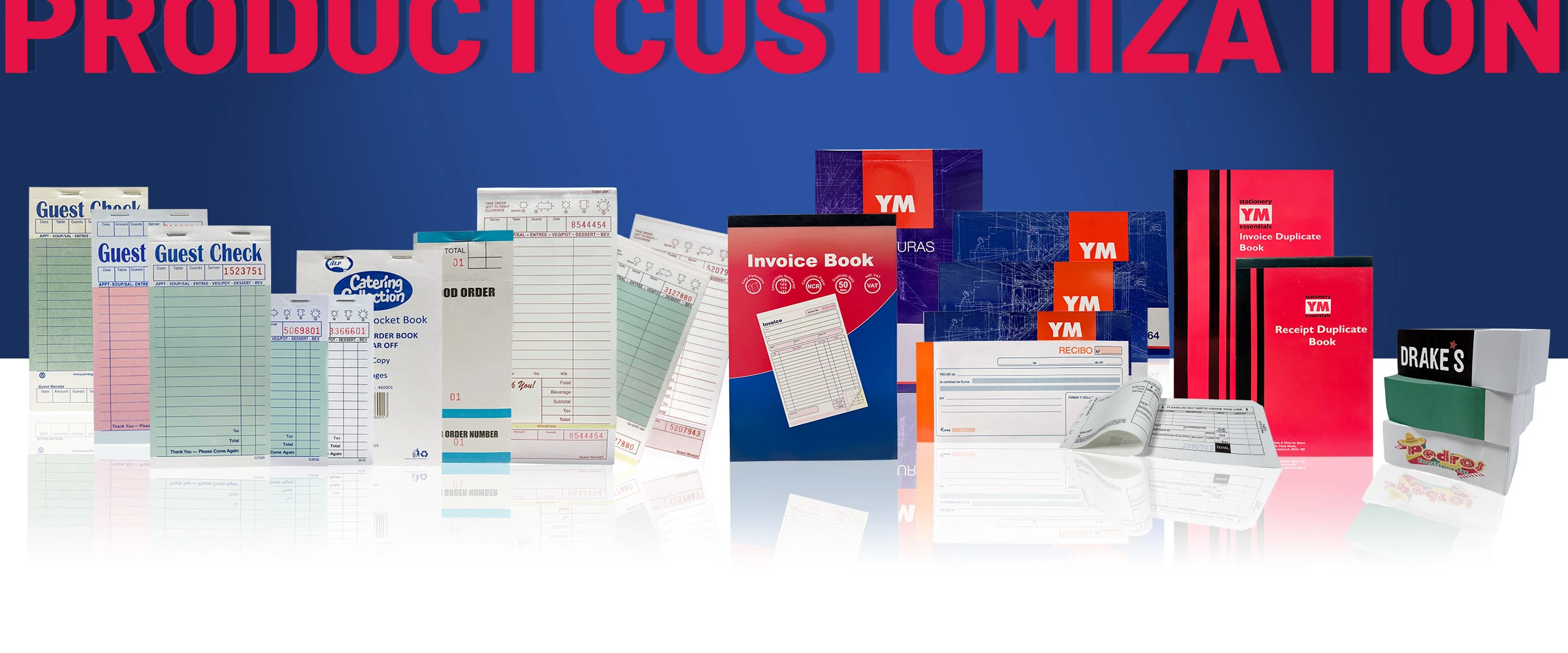
Describe what the product must do before selecting decorative details. A useful specification gives the printer enough information to identify conflicts and quote the same item that the distributor expects to receive.
| Specification area | Information to confirm | Why it matters |
|---|---|---|
| Product format | Loose sets, pad, bound book, roll, band or other format | Changes handling, finishing and packing |
| Finished size | Width × height and measurement unit | Prevents confusion between trim size and sheet size |
| Construction | Part count, sheet count, copy system, binding, stub and perforation | Defines how the product functions |
| Paper | Grade or functional requirement, sheet sequence and colors | Affects copying, writing and routing of records |
| Printing | Sides, ink colors, variable data, numbering and barcode fields | Identifies fixed and variable production steps |
| Quantity | Units per design and number of designs | Distinguishes total volume from volume per SKU |
| Acceptance reference | Approved proof, physical sample or revision-controlled drawing | Creates a common inspection reference |
Use a physical sample when reproducing an existing item, but do not send the sample without written notes. Record which details must match and which may be changed. For multipart documents, identify who receives each copy and whether the form is completed by hand or equipment. The YUANMING Printing Guide provides a broader reference for paper, numbering, binding and finishing terminology.
The YUANMING product range can help identify the relevant product family after the workflow is clear. Product pages should guide the specification; they should not replace it.
Keep product artwork separate from logistics data
Product artwork tells the printer what appears on the sellable item. Logistics data tells the packer, warehouse, carrier or receiving system how the item moves. Combining both into one unstructured email makes version control difficult.
For product artwork, record the file name, revision, language, front and reverse content, numbering position, color references and any fields that must remain writable or scannable. Identify the person authorized to approve the proof.
For the logistics record, define the distributor SKU, item description, unit count, carton count, gross and net weight fields when required, carton marks, destination and any buyer-supplied label files. If the channel uses GS1 identifiers, confirm the responsible party and the exact data before labels are produced. GS1 states that an SSCC uniquely identifies a logistic unit; that does not mean every ordinary carton automatically requires an SSCC label.
Never copy an old barcode or customer label into a new order merely because the carton size is similar. The buyer or designated data owner should validate the identifier and label content.
Plan the unit, carton and pallet hierarchy
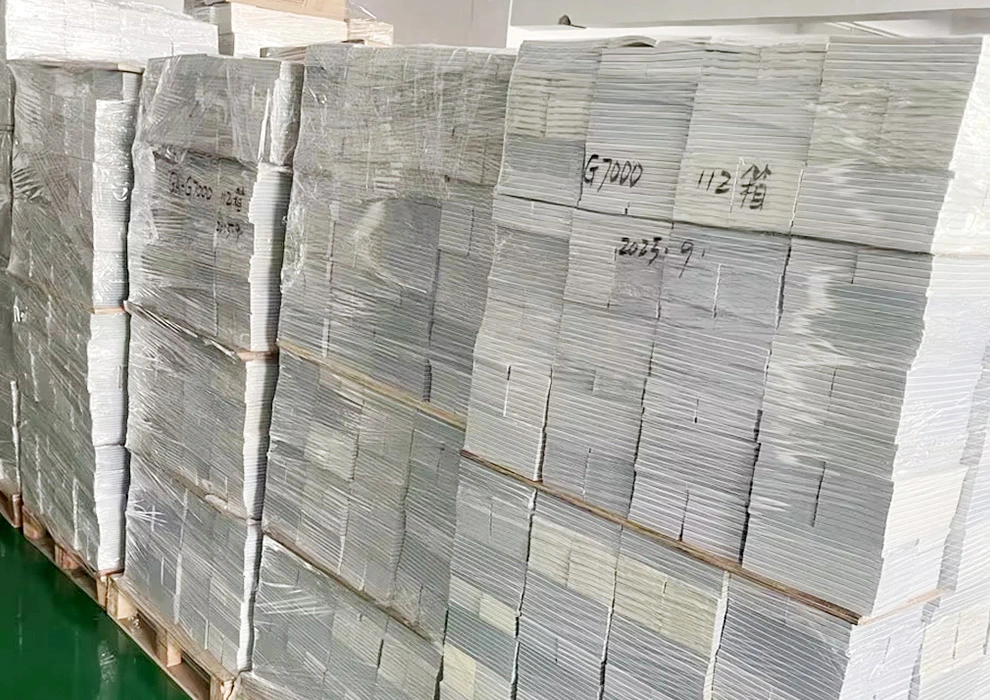
Bulk ordering becomes easier when quantities are expressed as a hierarchy rather than one total number. Define:
- what counts as one sellable unit;
- whether units are wrapped, banded or placed in an inner pack;
- how many units or inner packs go into one master carton;
- carton dimensions and weight targets that require confirmation;
- whether cartons are palletized and any warehouse constraints;
- the permitted quantity variance, if one is agreed in writing.
Packaging decisions are commercial decisions as well as protective ones. A larger carton may reduce carton count but become harder to handle. A small case pack may support reseller picking but increase packaging material and handling. A pallet pattern that works at the factory may not fit the distributor’s receiving or racking process.
State whether the order needs plain export cartons, distributor branding, customer-specific marks or retail-ready packaging. Confirm these requirements before quotation because packaging can affect material use, artwork, packing labor, dimensions and freight planning.
Control proof approval and later changes
The approved proof should identify the item, revision and approval date. Approval should cover content and layout, while production tolerances and material requirements remain in the written specification or order confirmation.
Use a short change log whenever a buyer alters artwork, numbering, part order, pack quantity or shipping marks. A change that looks small on screen can affect plates, paper sequence, finishing or carton labels. Ask the printer to confirm whether the change affects quotation, production timing or previously approved components.
For a repeat order, do not write only “same as last time.” Reference the previous purchase order, approved artwork revision and product specification, then list any deliberate changes. This reduces the risk of repeating an obsolete version.
Clarify shipping and import responsibilities
For international orders, name the agreed Incoterms rule, named place and version—for example, the applicable Incoterms 2020 rule plus the precise location. The International Chamber of Commerce explains that the rules allocate costs, risks and obligations, but they do not replace the sales contract or define the product specification.
Also confirm who arranges the main carriage, insurance when relevant, export clearance, import clearance, duties and destination handling. Avoid treating a freight estimate as a complete landed-cost promise unless the scope is stated.
U.S. importers should review applicable country-of-origin marking and other import requirements with their customs broker or responsible adviser. U.S. Customs and Border Protection specifically advises importers to consider country-of-origin marking, while noting that product-specific requirements can vary. The printer needs any required origin statement or carton instruction early enough to include it in the approved packing record.
Build a reorder-ready order record
A distributor gains more value from a bulk order when the records support the next order. Keep one controlled folder or purchasing record containing:
- internal SKU and product name;
- final specification;
- approved artwork and proof revision;
- numbering instructions and completed ranges, when applicable;
- unit, inner-pack, carton and pallet configuration;
- approved carton marks and label files;
- purchase order and supplier order reference;
- agreed trade term and named place;
- inspection or acceptance notes;
- actual receiving observations and corrections for the next run.
Do not overwrite the previous approved version. Archive it, issue a new revision and state what changed. That history helps a new team member distinguish an intentional update from an accidental mismatch.
Use this distributor RFQ checklist
Before requesting a quotation for bulk custom printed paper products, send the following information:
- buyer company, destination market and delivery location;
- product type and intended workflow;
- internal SKU or temporary project code;
- finished size and overall size where binding or stubs add material;
- construction, part count, sheet count and binding;
- paper or functional requirements, including copy sequence where relevant;
- printing sides, colors, languages and variable-data requirements;
- numbering, perforation, barcode and writable-area details;
- artwork files, revision names and approval contact;
- quantity per SKU, number of designs and expected reorder pattern;
- sellable-unit, inner-pack and master-carton quantities;
- carton marks, buyer labels and pallet or receiving constraints;
- requested trade term, named place and destination;
- physical reference sample or annotated photos, when available;
- unknown fields that require the printer’s recommendation.
If the order includes several product families, provide one line per SKU instead of combining all quantities into one paragraph. YUANMING’s category pages for guest checks, carbonless forms, carbon-copy forms and napkin bands can be used to identify relevant format questions.
When the checklist is ready, send the specification to YUANMING. Order-specific materials, quantity, packing, production timing and shipping scope can then be confirmed in the quotation rather than assumed.