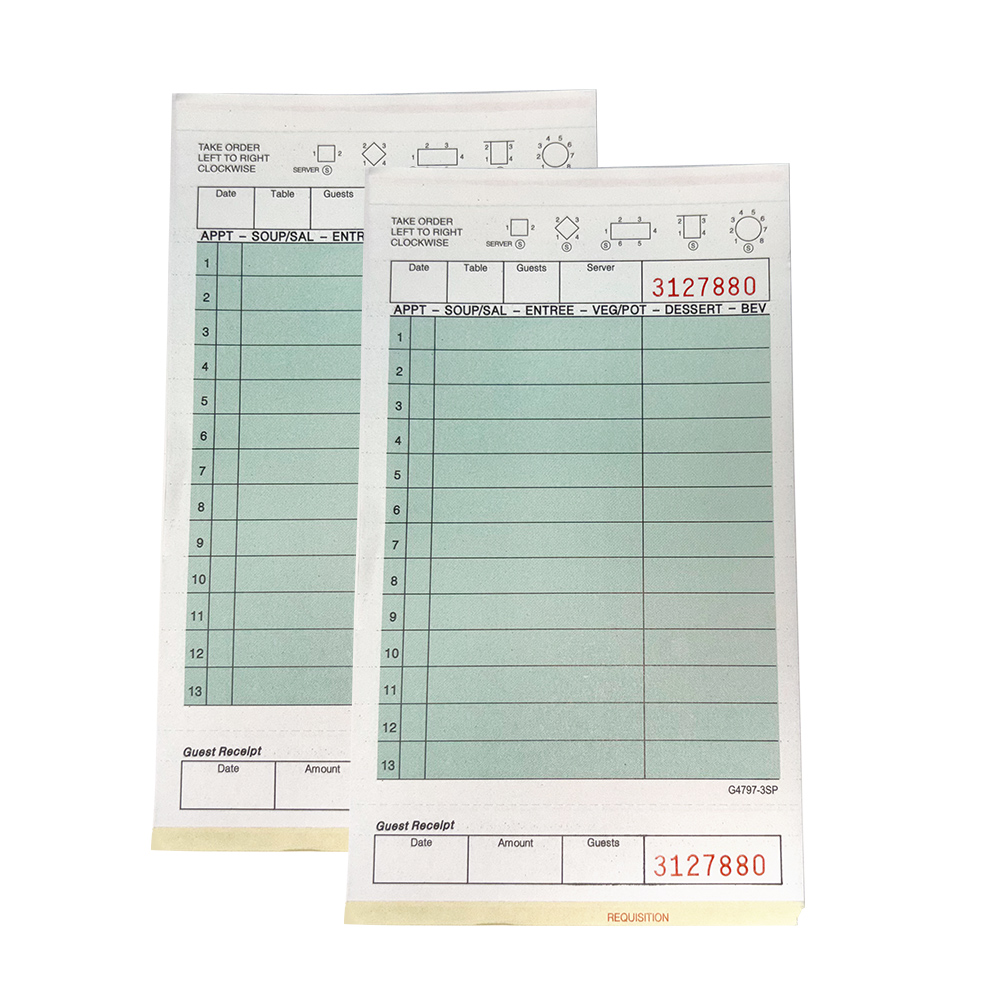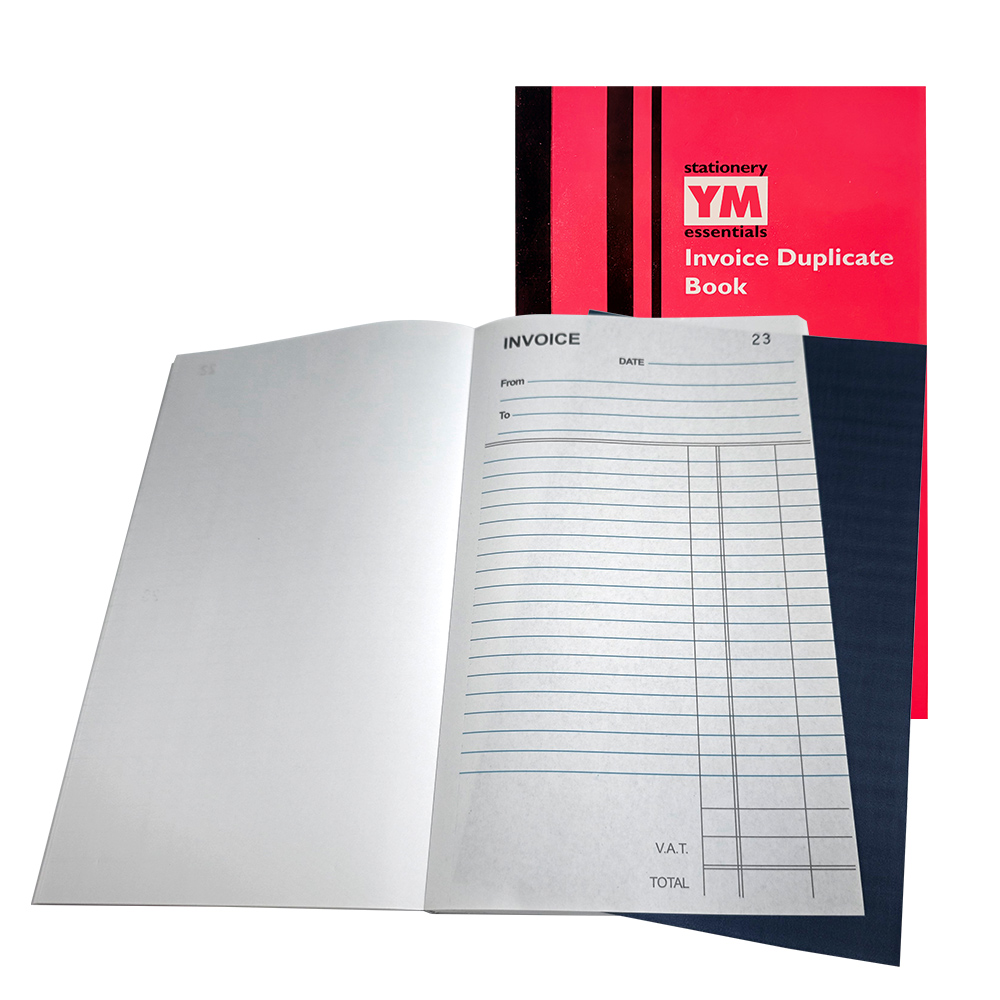
NCR forms and carbon copy forms both create multiple paper records from one handwritten or impact-printed entry, but they use different transfer systems. NCR, or carbonless, forms use coatings built into the sheets. Carbon copy forms place a separate carbon-coated sheet between the form plies. That difference changes how the sets are assembled, handled and specified.
The right choice is not determined by the familiar name alone. Start with the required workflow: how many records are needed, who receives each copy, whether staff should handle a loose transfer sheet and how the finished forms will be supplied.
Quick answer
Choose NCR forms when the copy-transfer system should be built into a pre-collated set. Choose a carbon-copy construction when a separate carbon interleaf is intentionally part of the form design or operating method.
- NCR and carbonless forms refer to the same basic coated-sheet copying method.
- Carbon copy forms require a carbon-coated transfer layer between ordinary sheets.
- Part count, sheet order, copy routing, binding and numbering remain separate specification decisions.
- Ask the printer to state the exact construction in the quotation instead of relying only on “duplicate,” “NCR” or “carbon copy.”
The difference in one sentence
NCR forms create copies through pressure-sensitive coatings on the form sheets, while carbon copy forms transfer the written image through a separate carbon-coated layer.
The California Office of State Publishing makes the distinction directly in its form-order guidance: “carbon” means carbon paper is inserted between bond plies, while “NCR” means no carbon is required. This is a useful buying definition because it describes the physical construction rather than a marketing label.
“NCR” and “carbonless” are commonly used for the same system. “Carbon copy” is sometimes used loosely to mean any duplicate, so a buyer should confirm whether the supplier means a true carbon-interleaved form or simply a multipart copy set.
How NCR forms make copies
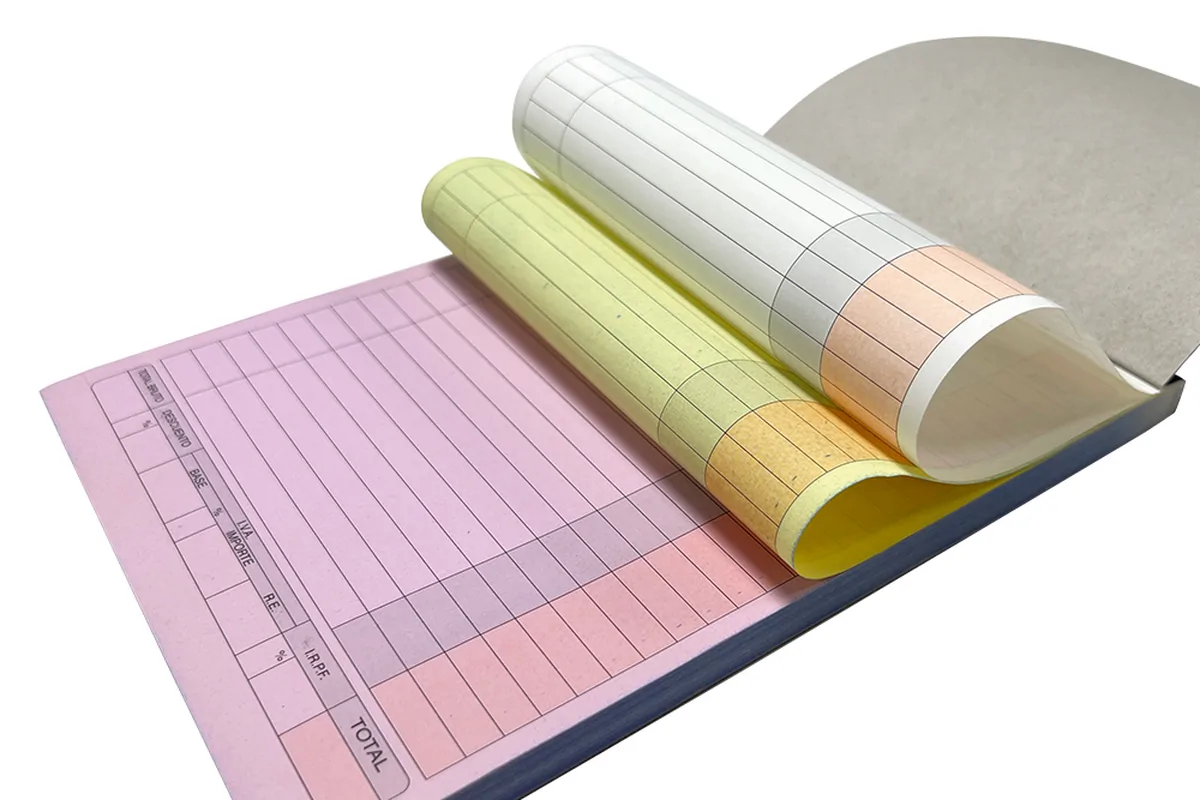
Carbonless paper uses complementary coatings that react when writing or impact pressure is applied. Paper manufacturer Koehler describes a typical multipart sequence:
- CB, or coated back: the top sheet carries microcapsules on its reverse side.
- CFB, or coated front and back: a middle sheet receives the image on its front and transfers it onward from its coated back.
- CF, or coated front: the final sheet receives the image.
Pressure breaks the relevant microcapsules and releases the color-forming material onto the receiving coating of the sheet below. The buyer does not need to specify the chemistry, but the printer does need to know the number of parts and their order so the correct sheet types are assembled.
The operational benefit is straightforward: the transfer layers are already part of the set. Staff write on the top sheet, then route or retain the resulting parts according to the workflow. However, “carbonless” does not automatically define size, paper colors, numbering, perforation, binding or printer compatibility. Those remain separate choices.
How carbon copy forms transfer writing

A carbon-copy construction places a carbon-coated sheet between the form plies. Pressure from handwriting, a typewriter or suitable impact equipment transfers the image from that coated layer to the receiving sheet.
This makes the transfer sheet a visible part of the assembly and handling process. Depending on the design, the carbon may be inserted during manufacture, retained in a book or handled separately. The exact arrangement must be stated; buyers should not assume that every “carbon form” is assembled in the same way.
The decision is therefore less about which technology sounds newer and more about whether the workflow is designed around a self-contained coated set or a separate transfer layer. A physical sample is especially valuable when reproducing an existing carbon-interleaved form.
Compare the two systems
Use the following comparison as a specification starting point, then confirm the actual construction with the printer.
| Decision point | NCR / carbonless forms | Carbon copy forms |
|---|---|---|
| Transfer method | Complementary coatings on the form sheets react under pressure | A separate carbon-coated layer transfers the image |
| Set assembly | Uses the correct coated sheet sequence, such as CB, CFB and CF | Uses ordinary form plies with a carbon interleaf in the required position |
| Handling before writing | Normally used as an already aligned multipart set | The carbon layer must remain correctly positioned within the assembly |
| Main specification risk | Treating “NCR” as if it also defines colors, part order, binding or compatibility | Failing to define where the carbon sheet sits and how it is retained or removed |
| Useful evidence for a quote | Part count, sheet sequence, colors, sample and required equipment | Physical sample or assembly drawing, ply order and carbon position |
Neither column is a universal recommendation. The correct system depends on the document, writing method, staff routine and destination of each copy.
Choose NCR forms when the set should be self-contained

NCR is a strong starting point when staff should pick up one aligned set, write once and separate the resulting copies without positioning a loose carbon sheet. Common buying situations include invoices, receipts, delivery notes, work orders and service records, but the final design should follow the actual information flow rather than a generic template.
Before choosing the coated-sheet route, confirm:
- how many paper records are required;
- which person or department receives each part;
- whether the forms are completed by hand or through equipment;
- whether sets are loose, padded or bound in books;
- where numbering, perforations and receipt stubs belong.
For current format options, review the YUANMING Carbonless Forms page after defining these workflow requirements.
Choose carbon copy forms when the transfer layer is intentional
A carbon-copy construction can be appropriate when an established form, machine or operating procedure specifically uses a separate carbon layer. It may also be relevant when a buyer must reproduce an existing form whose assembly already depends on carbon interleaves.
Do not select it only because staff call every duplicate a “carbon copy.” Inspect the current form. If there is a distinct dark transfer sheet between plies, record its position, dimensions and how it remains aligned. If there is no separate transfer sheet, the existing form may instead be carbonless.
The YUANMING Carbon Copy Forms page can be used to continue the product discussion once the transfer construction is clear.
Specify the form, not just the name
Terminology is useful for starting a conversation, but it is not enough for production. A reliable specification describes what the form must do and how the parts are assembled.
For either system, identify the finished size, overall size when a stub or binding margin is included, number of parts, destination of each copy, front and reverse printing, numbering, perforation, binding and packing. State whether the form is completed by hand or processed through equipment. Equipment use may impose paper and ink requirements that need testing or supplier confirmation.
The YUANMING Printing Guide provides a broader reference for paper, numbering, binding and finishing terminology. Mark any unknown field as “to be confirmed” instead of guessing.
Use this multipart-form RFQ checklist
Prepare the following before requesting a quotation:
- transfer system: NCR/carbonless or carbon-interleaved;
- form purpose and writing method;
- required number of parts and destination of every copy;
- finished width and height, plus any stub or binding allowance;
- sheet order and requested colors, if already decided;
- loose sets, pads or bound books;
- carbon-interleaf position and retention method, when applicable;
- numbering range, repeat position and ink preference;
- perforation, receipt stub and reverse-side printing;
- artwork file or a clear physical reference sample;
- order quantity, packing needs and any equipment compatibility requirement;
- unknown details that require the printer’s recommendation.
When this information is ready, send YUANMING the specification. The quotation can then identify the proposed transfer construction instead of relying on an ambiguous product name.